G6 Trusted by 1k+ Business Directors

Reducing Corporation Tax

What is Corporation Tax?

Corporation Tax is the tax that is due on business profits and on any gains made from investments or from a business selling its assets. It applies to all UK limited companies (plus foreign companies with UK offices) and is collected by the government.

If your company is registered with Companies House, you will be paying Corporation Tax at the rate appropriate to your company profits. As profits grow, it can become a more actively managed consideration, with various ways to reduce this liability within HMRC rules.

Book a free consultation Calculate Your Tax Savings

No obligationGet personalised guidance.

Corporation Tax at a glance

  • Corporation Tax is paid by UK limited companies on taxable profits

  • The rate applied depends on the level of profit generated

  • Allowable costs and reliefs reduce taxable profit before tax is calculated

  • Corporation Tax is separate from personal tax paid by directors or shareholders

  • As profits increase, Corporation Tax often becomes more relevant to wider planning decisions

How much is Corporation Tax

The latest Corporation Tax rates are:

  • 25% for profits of £250,000 or over
  • 19% for profits of £50,000 or less

If business profit is between £50,000 and £250,000, the company can claim Marginal Relief which serves as a gradual increase in Corporation Tax rates from the lower rate of 19% up to 25%.

Certain business expenses are tax-deductible, such as rent for the business premises, property insurance, and day to day office-running costs. You can find a full list of HMRC allowable business expenses on the gov.uk website.

Common Corporation Tax mistakes

  • Focusing only on headline tax rates rather than taxable profit
  • Treating Corporation Tax as a once-a-year compliance task
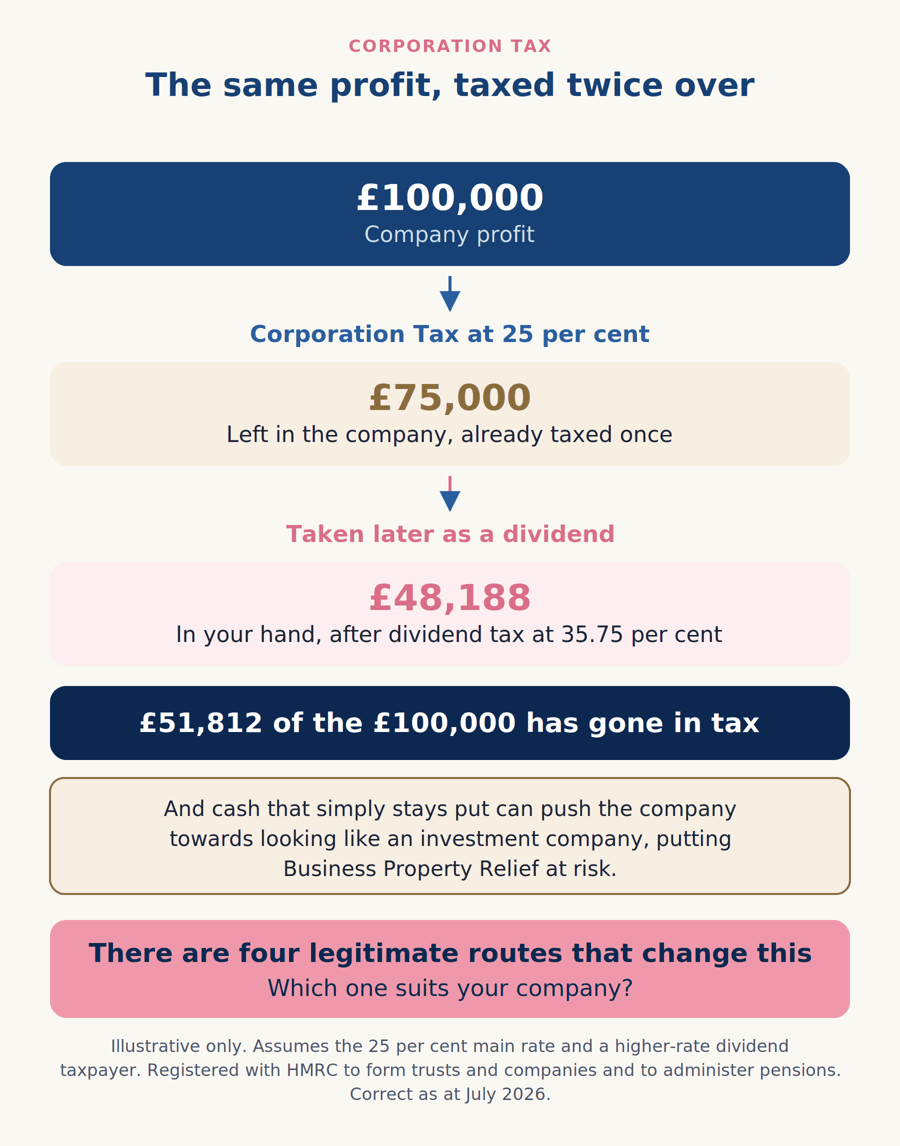
  • Retaining surplus cash without considering longer-term implications
  • Reducing tax in ways that restrict access to capital or flexibility
  • Failing to review Corporation Tax as the business grows or changes structure

Reduce Corporation Tax

Successful business owners know that the more successful their business, the higher their Corporation Tax liability will be.

There are a number of legal ways that business owners can reduce their Corporation Tax bill. These include making additional pension contributions, making charitable contributions, and investing in research and development.

In practice, Corporation Tax is often considered alongside wider decisions about profit retention, reinvestment, and long-term business planning.

m
Reduce Tax, Retain Control

Reduce Corporation Tax using the Small Self-Administered Scheme (SSAS) and Family Investment Companies, as part of a Lifetime Business Tax Plan, whilst retaining control and access to capital for the business.

How Corporation Tax works

Business Income

Money the company earns from its activities

Business Costs

Day-to-day costs of running the business

Accounting profit

Profit shown in the company accounts

Tax adjustments

Adjustments under UK tax rules
(for example, capital allowances)

Corporation Tax payable

Taxable profit × applicable rate
(19% / Marginal Relief / 25%)
paid to HMRC

When to plan for Corporation Tax

Corporation Tax often starts as a compliance obligation. As profits increase and surplus cash is retained, it becomes a planning consideration.

At this stage, decisions about timing, structure, and control can have a greater impact than headline tax rates alone.

Corporation Tax planning considerations

  • How and when profits are retained or reinvested
  • The impact of timing on expenditure and contributions
  • Maintaining access to capital and business liquidity
  • Aligning tax efficiency with long-term business and personal objectives
  • Ensuring planning remains appropriate as circumstances evolve

Maintain business liquidity

In order to maintain a successful business and ensure continued growth, flexible cash flow is essential. However, using funds in the various ways outlined above can leave them tied up, with limited access when capital is needed for the business.

The Small Self-Administered Scheme (SSAS) and the Family Investment Company are tax planning structures that, whether used alone or combined, may allow business owners to reduce Corporation Tax without restricting essential cash flow.

One of the unique features of the SSAS pension is the SSAS Loanback, which allows you to loan up to 50% of your pension to your trading company for any business purpose. You can find out more about this feature, and other ways to reduce Corporation Tax without affecting business liquidity, by viewing our Fact File here.

Invest in property

Unlike a traditional pension, the SSAS can invest in property. This means a SSAS may be used to purchase business premises and then lease them back to the trading company, subject to advice and HMRC rules. Rental payments are commonly treated as an allowable business expense. This approach can form part of wider planning discussions around business assets, control, and long-term ownership.

You can find out more about using a pension to invest in property here.


Further reading: Corporation Tax in the UK

For a more detailed explanation of current rates, reliefs, and how Corporation Tax affects cash flow, reinvestment decisions, and long-term planning, see our full guide: Corporation Tax in the UK: A Practical Guide for Business Owners.

Want your questions answered by our expert SSAS and investment consultants?

Book your free, 15 minute no obligation call to find out more!

Book now